
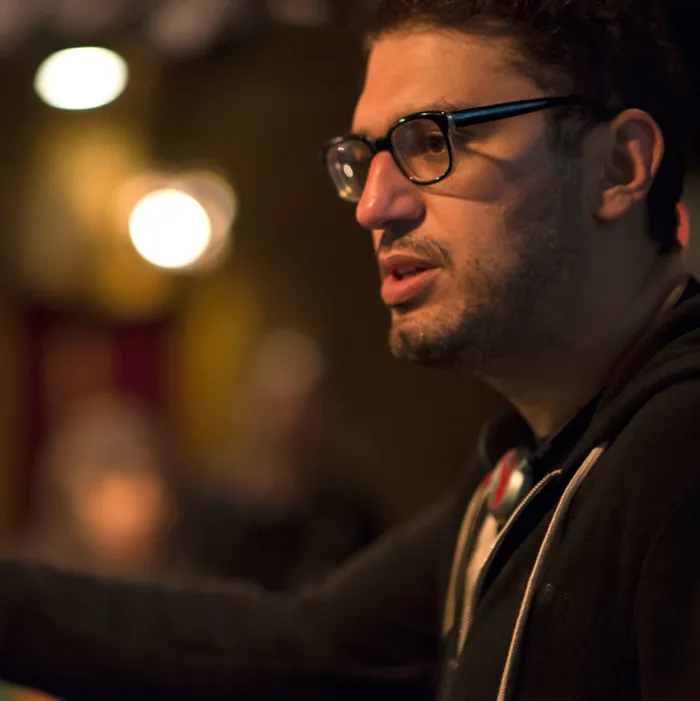
Sam Esmail, the show's creator and showrunner, is the credited writer on the vast majority of the episodes. In an interview, Sam Esmail shared that he is fascinated by hacker culture and wanted to make a film about it for around 15 years. In the production, Esmail consulted experts to give a realistic picture of hacking activities. Another inspiration for Esmail, who is of Egyptian descent, was the Arab Spring, mainly the Egyptian Revolution, where young people who were angry at society used social media to bring about a change. He has said that Elliot is a "thinly-veiled version" of himself.
Esmail had originally intended Mr. Robot to be a feature film, with the end of the first act being someone finding out that he had a mental disorder while enacting a greater scheme. However, midway through writing the first act, he found that the script had expanded considerably, and that it had become better-suited for a television show.He removed 20 of around 89 pages of the script then written, and used it as the pilot for the series, and what was to have been the end of the first act became the finale of the first season. Esmail took the script to film and television production company Anonymous Content to see if it could be developed into a television series, which was then picked up by USA Network. USA gave a pilot order to Mr. Robot in July 2014. After an exhaustive search to cast the lead role, it was announced in September 2014 that Rami Malek had been cast as Elliot; the remainder of the roles in the pilot were cast later in September and October.
USA picked it up to series with a 10-episode order in December 2014. Production began in New York on April 13, 2015. The pilot premiered on multiple online and video on demand services on May 27, 2015, and the series was renewed for a second season before the first season premiered on USA on June 24, 2015. In December 2015, it was announced that Esmail would direct all episodes in the second season. In June 2016, it was announced that the second season's episode order was increased from 10 to 12 episodes. The 12-episode second season premiered on July 13, 2016. On August 16, 2016, USA renewed Mr. Robot for a third season to air in 2017. The third season debuted in October 2017 and consisted of 10 episodes. All episodes were directed by Esmail, just as in the second season. On December 13, 2017, USA renewed Mr. Robot for a fourth season. In August 2018, it was confirmed that the fourth season would be the final season.
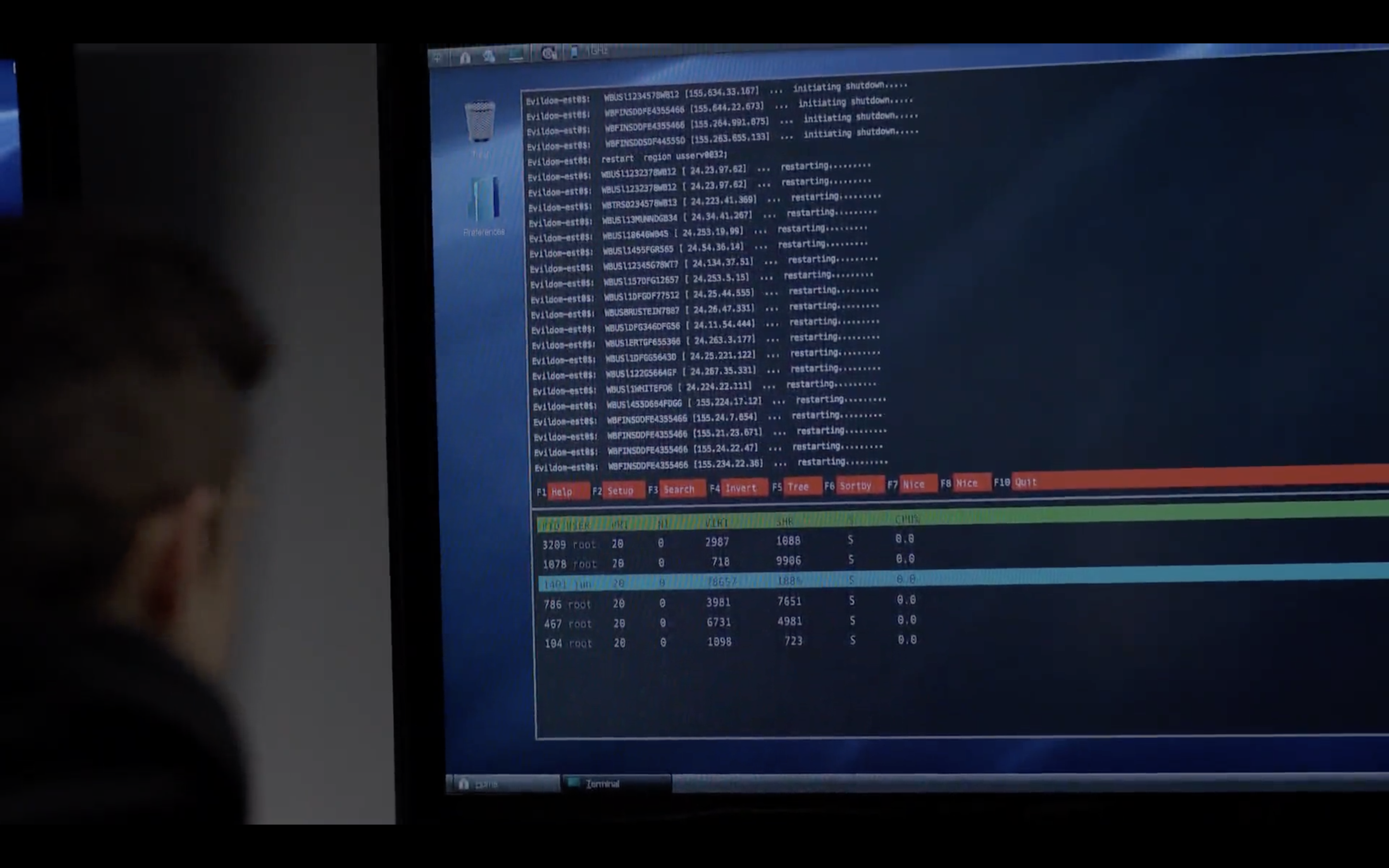
Mr. Robot has been widely praised for its technical accuracy by numerous cybersecurity firms and services such as Avast, Panda Security, Avira, Kaspersky, Proton Mail, and bloggers who analyzed and dissected the technical aspects of the show after episodes containing hacking scenes. Aside from the pilot episode, Esmail hired Kor Adana (former network security analyst and forensics manager for Toyota Motor Sales), Michael Bazzell (security consultant and former FBI Cyber Crimes Task Force agent and investigator) and James Plouffe (lead solutions architect at MobileIron) as his advisors to oversee the technical accuracy of the show. By the second season, Adana assembled a team of hackers and cybersecurity experts including Jeff Moss (founder and director of Black Hat and DEF CON computer security conferences), Marc Rogers (principal security researcher for Cloudflare and head of security for DEF CON), Ryan Kazanciyan (chief security architect for Tanium) and Andre McGregor (director of security for Tanium and former FBI Cyber Special agent) to assist him with the authenticity of the hacks and the technology being used. Hacking scenes were performed by members of the technical team in real life, recorded and rebuilt using Flash animation. Animation process is carried out by animator Adam Brustein under the direct supervision of Adana himself. Kali Linux and its tools were used in multiple episodes.
Sam Esmail has acknowledged several major influences on the show, such as American Psycho, Taxi Driver, A Clockwork Orange, and The Matrix. In particular, Esmail credited Fight Club as the inspiration for a main character who has dissociative identity disorder creating a new manifestation of his deceased father in the form of a hacker, as well as for the anti-consumerist, anti-establishment, and anti-capitalist spirit of its characters.